A 1938 act written for propaganda, still used today
FARA was designed to tag Nazi-era influence campaigns; eight decades later it remains the primary tool for exposing foreign principals who pay for access to Washington.
The act and its moment
Congress passed the Foreign Agents Registration Act in 1938, not to regulate lobbying in any modern sense but to make visible something more alarming: the systematic effort by foreign governments and their agents to shape American public opinion through propaganda. The immediate context was the spread of pro-Nazi and pro-Soviet material inside the United States, distributed through cutouts and front organizations that obscured who was actually funding them. The act's drafters wanted a simple mechanism — public registration — to let Americans trace the money and the message back to a foreign source.
The core obligation has not changed in eighty-six years. Anyone who acts as an agent of a foreign principal — a foreign government, political party, or any person or entity controlled by one — and who engages in political activity, public relations, or political consulting on that principal's behalf must register with the Department of Justice before beginning the work. The word "agent" is deliberately broad. It covers lobbyists, public-relations firms, lawyers advising on legislative strategy, and others who might not appear on any K Street directory but who are nonetheless working to advance a foreign government's interests in Washington.

Registration requires the filing of an initial statement that names the foreign principal, describes the nature of the relationship, and sets out in some detail the activities the agent expects to perform. After that, a supplemental statement is due every six months — not quarterly, which is one of the structural differences from the domestic lobbying disclosure system the Lobbying Disclosure Act established in 1995. Each supplemental statement must report monies received and disbursed, describe the activities actually carried out, and attach copies of any informational materials disseminated. Those materials — pamphlets, articles, press releases, scripts — must carry a label identifying them as coming from a registered foreign agent.
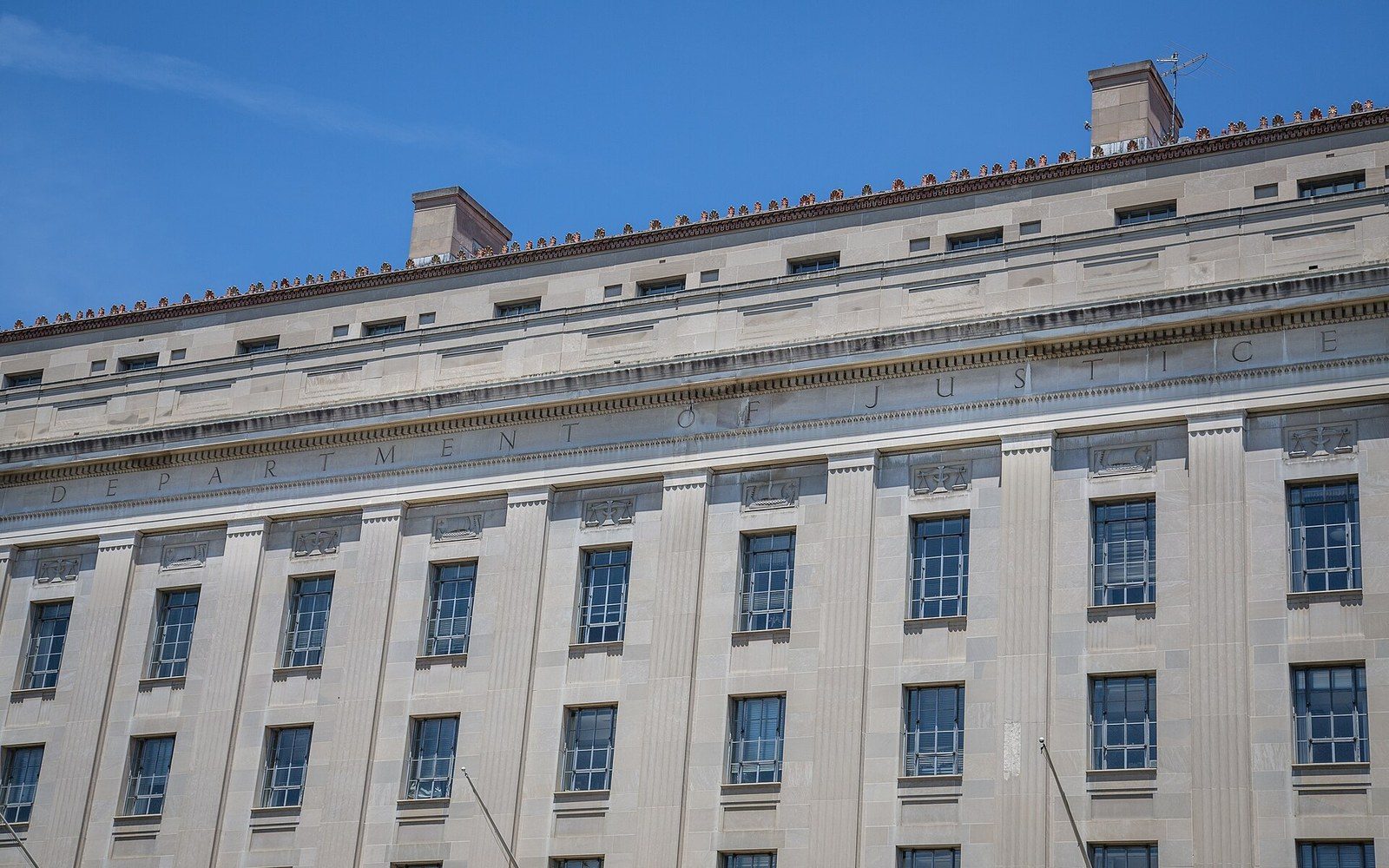
The act is administered by the FARA Unit of the National Security Division at the Department of Justice, not by the Clerk of the House or the Secretary of the Senate. That division sits outside the normal lobbying-disclosure infrastructure, which is one reason foreign-agent filings and domestic lobbying filings have never been fully integrated into a single searchable system, though both offices hold their respective halves of the record.
What the filings actually reveal
The FARA database maintained by the Department of Justice ↗ is publicly searchable and holds registration statements, supplemental statements, and the informational materials that agents must submit. The full text of lobbying contracts, retainer letters, and PR campaign plans frequently appears in the exhibits, making FARA filings considerably more detailed about strategy and compensation than a standard quarterly Lobbying Disclosure Act filing. Where the LDA requires only an income band reported by range, a FARA supplemental statement typically includes actual dollar figures for payments received and disbursed.
The filings also show which officials were contacted, which legislative matters were addressed, and which media appearances were arranged on behalf of a foreign principal. When a foreign government hires an American firm to seek support for a bilateral trade agreement or to lobby against a sanctions bill, every meeting, op-ed placement, and congressional visit must appear in the six-month statement. The granularity makes FARA filings valuable documentary evidence of how foreign influence campaigns operate — which is precisely what the 1938 Congress intended, even if it imagined a simpler world of pamphlets rather than multimedia campaigns.
Not all activity that might seem like foreign influence falls under FARA. The act contains exemptions, the most consequential of which is for activity that qualifies as legal representation before courts or federal agencies in non-political proceedings. A lawyer representing a foreign national in a visa proceeding is not a foreign agent under FARA. A lawyer lobbying the State Department on the same client's behalf probably is. The line is contested in practice and has been the subject of enforcement guidance from the Justice Department on multiple occasions.
Enforcement was historically lax. For most of FARA's history, the Justice Department treated non-registration as an administrative problem to be resolved by after-the-fact filing rather than a matter for prosecution. Between the act's passage in 1938 and the mid-2010s, criminal prosecutions under FARA were exceedingly rare, and the Government Accountability Office ↗ found in a 2016 review that the Department of Justice's oversight and enforcement mechanisms had significant weaknesses, including inadequate guidance to registrants and poor follow-up when filings were late or incomplete.
Enforcement and evolution
That enforcement posture changed sharply after 2016, when the Justice Department brought or facilitated several high-profile cases involving retroactive FARA registrations and, in some instances, criminal charges. The shift reflected growing concern about foreign-influence operations conducted through American intermediaries, and it drew attention to how thin the line between ordinary foreign-principal representation and covert influence could be.
The Abramoff prosecution of 2006, centered on domestic corruption rather than foreign representation, nonetheless informed how investigators thought about undisclosed financial relationships between lobbyists and their true payors — a structure that maps directly onto the FARA problem of agents concealing who is ultimately directing and funding their work. The lesson absorbed from that period was that disclosure regimes depend entirely on accurate registration; when agents register late, partially, or not at all, the public record fails its purpose.
The act has been amended several times — most notably in 1966, when Congress narrowed the definition of "political propaganda" and reshaped the exemptions — but the fundamental architecture remains what it was in 1938: registration before activity, disclosure of all material disseminated, and six-monthly financial accounting. Reformers have periodically argued that the six-month cycle is too slow for a modern influence environment, but as of 2025 the statutory requirement has not changed.
What has changed is the volume of filings. The number of active foreign-agent registrations has grown substantially since 2016, reflecting both stricter enforcement and broader awareness of the registration requirement among firms that might previously have concluded — rightly or wrongly — that their work did not cross the FARA threshold. The filings themselves, accessible through the DOJ database, remain the most granular public record of how foreign governments, through retained American agents, attempt to shape the decisions made in Washington.